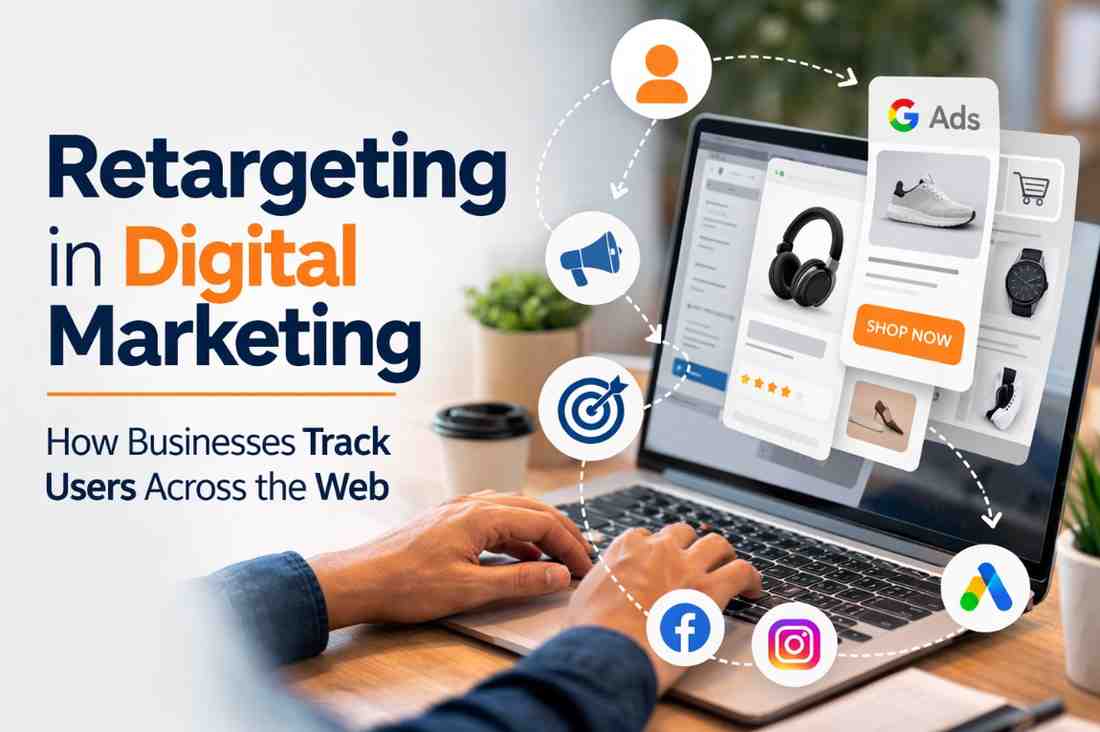
Retargeting is the digital marketing strategy that tracks users across the web and shows them targeted ads after they visit a website. It works by using tracking pixels and browser cookies to record user activity and display relevant advertisements on other websites, apps, or social media platforms.
In digital marketing, businesses use several strategies to reach potential customers. One powerful technique is the digital marketing strategy that tracks users across the web, commonly known as retargeting.
Retargeting allows marketers to display targeted advertisements to people who have already visited their website. This strategy increases the chances of converting visitors into customers by reminding them about products or services they previously viewed.
Because most users do not make a purchase during their first website visit, retargeting helps bring them back and encourages them to complete the desired action.
What Is Retargeting in Digital Marketing?
Retargeting is a digital advertising technique that tracks online users and shows them relevant ads after they leave a website.

Want to turn more visitors into loyal customers? Discover 22 proven digital marketing tactics that can boost your conversion rate and maximize your results—read the full guide now!
When someone visits a website, a small piece of code called a tracking pixel or cookie is added to their browser. This technology allows advertisers to recognize that user later and show them targeted advertisements on other websites or platforms.
For example:
- A user visits an online store and looks at a pair of shoes.
- The user leaves the site without buying anything.
- Later, the same user sees ads for those shoes while browsing other websites.
This is how retargeting works.
How Retargeting Tracks Users Across the Web
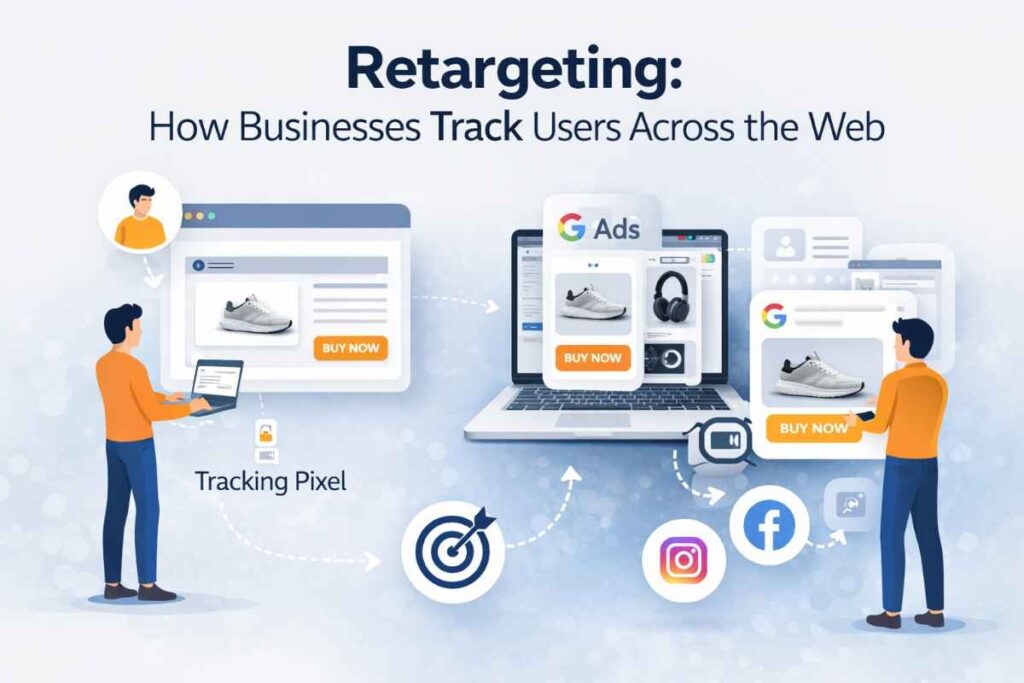
Retargeting works by using different tracking technologies that help marketers understand user behavior after someone visits a website. These technologies collect anonymous data about how visitors interact with web pages and then use that information to display relevant ads across various online platforms.
Below are the main methods used in retargeting to track users across the web.
Website Visit Tracking
The first step in retargeting begins when a user visits a website. At this point, a small piece of tracking code known as a tracking pixel is activated. This pixel records basic information about the visitor’s actions, such as the pages they viewed, the products they explored, or the time they spent on the website.
This data helps marketers understand user interests and identify visitors who may be potential customers.
Cookie-Based Data Storage
After a visitor interacts with a website, cookies are stored in the user’s browser. Cookies are small data files that keep anonymous information about browsing behavior.
These cookies allow advertising platforms to recognize returning visitors and categorize them into specific audience groups. For example, users who viewed a product page may be grouped together so that they can receive similar product advertisements later.
Ad Display Across Multiple Platforms
Once user data is collected, advertising platforms use this information to deliver targeted retargeting ads across different websites and online platforms. Advertising networks such as display networks and social media platforms can then show relevant ads to those users while they browse other websites, watch videos, or scroll through social media.
This process helps businesses reconnect with potential customers, remind them about products they viewed earlier, and encourage them to return to the website to complete a purchase or other desired action.
Major Benefits of Using Retargeting in Digital Marketing
Retargeting has become an essential strategy in modern digital marketing because it focuses on people who have already interacted with your website, product, or service. Instead of targeting completely new audiences, retargeting reconnects with users who previously visited your website but left without taking action. This approach helps businesses increase engagement, improve conversions, and maximize the effectiveness of their advertising campaigns.
Below are some of the most important benefits of retargeting in digital marketing.
Increased Conversion Opportunities
One of the biggest advantages of retargeting is its ability to reach users who have already shown interest in a product or service. These visitors may have browsed a product page, read blog content, or added an item to their cart but did not complete the desired action.
By showing targeted ads to these users later, businesses can remind them about what they viewed and encourage them to return. Because these users are already familiar with the brand, retargeting campaigns often generate significantly higher conversion rates than traditional advertising.
Stronger Brand Recognition
Retargeting also helps businesses stay visible to potential customers after they leave the website. When users repeatedly see advertisements for the same brand across different websites, apps, or social media platforms, it strengthens brand recall.
This repeated exposure builds familiarity and trust, making users more likely to remember the brand when they are ready to make a purchase decision.
Highly Relevant and Personalized Ads
Another major benefit of retargeting is the ability to deliver personalized advertising based on user behavior. Instead of showing generic ads, businesses can display ads related to the specific products or services a visitor previously explored.
For example, if someone views a particular product on an online store, retargeting ads may display the same item or similar products later. This makes advertising more relevant to users and increases the chances of engagement.
Improved Return on Marketing Investment
Retargeting allows marketers to use their advertising budgets more efficiently by focusing on users who already have an interest in their brand. Instead of spending money on broad audiences that may not convert, businesses can target people who are already part of their marketing funnel.
As a result, retargeting campaigns often produce a higher return on advertising investment (ROI) while helping businesses achieve better results from their digital marketing strategy.
Key Benefits of Retargeting in Digital Marketing
Retargeting is one of the most effective strategies in digital marketing because it focuses on users who have already interacted with your website or content. By targeting people who are already familiar with your brand, businesses can significantly improve their marketing performance and conversion rates.
Below are some of the most important benefits of retargeting in digital marketing.
Higher Conversion Rates
One of the biggest advantages of retargeting is that it targets users who have already shown interest in your products or services. Since these visitors are already familiar with your brand, they are more likely to return to your website and complete actions such as making a purchase, signing up, or requesting a service.
This is why retargeting campaigns often achieve higher conversion rates compared to standard advertising campaigns.
Improved Brand Awareness
Retargeting helps businesses stay visible to potential customers even after they leave the website. When users repeatedly see ads for a brand while browsing other websites or social media platforms, it strengthens brand recognition.
This repeated exposure helps users remember the brand and increases the chances of them returning later.
Personalized Advertising Experience
Retargeting allows businesses to create highly personalized ads based on user behavior and interests. For example, if someone views a specific product on a website, they can later see advertisements featuring that same product.
This personalized approach makes advertising more relevant and engaging for users.
Better Return on Advertising Investment
Because retargeting focuses on users who have already shown interest, advertising budgets are used more efficiently. Instead of targeting random audiences, businesses can focus on people who are more likely to convert.
As a result, retargeting campaigns often deliver a better return on investment (ROI) and help businesses maximize the effectiveness of their digital marketing strategy.
Real-World Examples of Retargeting in Digital Marketing
Retargeting is widely used across many industries to reconnect with visitors who previously showed interest in a product or service but did not complete an action. By displaying personalized ads based on user behavior, businesses can remind potential customers about what they viewed and encourage them to return.
Below are some common examples of retargeting in digital marketing.
E-commerce Retargeting
Online stores frequently use retargeting ads to promote products that users previously viewed on their website. For example, if a visitor looks at a pair of shoes or a smartphone but leaves without purchasing, the same product may appear in ads while they browse other websites or social media platforms.
This strategy helps e-commerce businesses increase conversions by reminding customers about products they were interested in.
Travel and Booking Retargeting
Travel websites and booking platforms use retargeting to show ads for flights, hotels, or travel packages that users previously searched for. If someone searches for a flight or hotel but does not book it, they may later see advertisements for the same destination or similar deals.
These reminders encourage travelers to return to the site and complete their booking.
Online Course and Education Retargeting
Educational platforms and course providers also use retargeting to promote courses, webinars, or training programs. If a visitor explores a course page but does not enroll, they may later see ads reminding them about the program or offering a limited-time discount.
This strategy helps educational businesses re-engage potential students and increase course enrollments.
SaaS and Software Retargeting
Software companies often use retargeting to promote free trials, product demos, or software subscriptions to people who previously visited their website. If a visitor reads about a software product but leaves without signing up, targeted ads may appear encouraging them to try the service.
For SaaS businesses, retargeting is an effective way to bring back interested users and convert them into paying customers.
These real-world examples show why retargeting is considered one of the most effective digital marketing strategies that track users across the web. By reconnecting with visitors who already showed interest, businesses can significantly improve engagement, conversions, and overall marketing performance.
Retargeting vs Remarketing: Understanding the Key Difference
Many people use the terms retargeting and remarketing interchangeably in digital marketing. While they share the same goal—bringing back potential customers who previously interacted with your brand—there is a slight difference in how these strategies work.
1. Retargeting
Retargeting mainly focuses on showing targeted ads to users across different websites and online platforms after they visit a website. It works through tracking technologies such as cookies or pixels that record user activity.
For example, if someone visits an online store and views a product but leaves without buying it, they may later see ads for that same product on other websites, social media platforms, or mobile apps. This helps remind users about the product and encourages them to return and complete the purchase.
2. Remarketing
Remarketing, on the other hand, usually refers to re-engaging with users through email marketing campaigns. Businesses use remarketing to send follow-up emails to people who previously interacted with their website, subscribed to newsletters, or added items to a shopping cart but did not complete a purchase.
These emails may include product reminders, special discounts, or personalized offers to encourage users to return.
Why Both Strategies Matter
Both retargeting and remarketing aim to reconnect with interested users and increase conversion rates. By reminding potential customers about a product or service they previously explored, businesses can improve engagement and turn lost opportunities into successful sales.
Top Advertising Platforms That Support Retargeting Campaigns
Many modern advertising platforms provide retargeting features that allow businesses to track users across the web and show personalized ads. These platforms use technologies such as tracking pixels, cookies, and audience data to display relevant advertisements to people who have previously visited a website.
By using these tools, marketers can create highly targeted advertising campaigns that focus on users who already showed interest in their products or services.
Below are some of the most popular platforms used for retargeting in digital marketing.
Google Display Network (GDN)
The Google Display Network is one of the largest advertising networks in the world. It allows businesses to display retargeting ads across millions of websites, mobile apps, and online platforms.
With Google retargeting campaigns, marketers can show ads to users who previously visited their website while they browse other websites within the network. This helps increase brand visibility and encourages users to return and complete a purchase or action.
Facebook Ads
Facebook Ads provides powerful retargeting tools through its tracking technology known as the Facebook Pixel. This pixel tracks user behavior on a website and allows advertisers to show personalized ads to those visitors on Facebook.
Businesses often use Facebook retargeting to remind users about products they viewed or abandoned in their shopping cart.
Instagram Ads
Because Instagram is connected to the Facebook advertising system, businesses can also run Instagram retargeting campaigns. This allows advertisers to reach website visitors through visually engaging ads while they scroll through their Instagram feed or stories.
Instagram retargeting is especially effective for brands that rely on visual content such as fashion, travel, and lifestyle products.
LinkedIn Ads
LinkedIn Ads offers retargeting options for businesses targeting professionals and B2B audiences. Companies can show ads to people who previously visited their website or interacted with their LinkedIn content.
This makes LinkedIn retargeting a powerful strategy for lead generation, business services, and professional marketing campaigns.
YouTube Advertising
YouTube advertising also supports retargeting campaigns through the Google Ads platform. Businesses can show video ads to users who previously visited their website or interacted with their YouTube channel.
Video retargeting is highly effective because it combines visual storytelling with personalized advertising, making it easier to reconnect with potential customers.
Using these platforms, businesses can build powerful retargeting campaigns that track users across the web and deliver personalized advertisements based on their browsing behavior. This strategy helps marketers increase engagement, improve brand recall, and ultimately drive higher conversions.
Why Retargeting Is Important in Digital Marketing
Most website visitors leave without making a purchase. Studies show that only a small percentage of users convert during their first visit.
Retargeting helps businesses stay connected with potential customers and remind them about their products or services. This strategy increases the chances of turning interested visitors into paying customers.
Final Thoughts
The digital marketing strategy that tracks users across the web is known as retargeting. It uses cookies and tracking pixels to display personalized ads to people who previously interacted with a website.
Because it focuses on users who already showed interest, retargeting is one of the most effective strategies for improving conversions and maximizing advertising results.
For businesses looking to grow online, understanding and implementing retargeting can significantly improve marketing performance.
Frequently Asked Questions About the Digital Marketing Strategy That Tracks Users Across the Web
Many people have questions about the digital marketing strategy that tracks users across the web and how it works. The following FAQs explain retargeting, its benefits, and how businesses use it to reconnect with website visitors and improve conversions through targeted advertising campaigns.
1. What is the digital marketing strategy that tracks users across the web?
The digital marketing strategy that tracks users across the web is retargeting. It uses cookies and tracking pixels to record user behavior on a website and then displays targeted ads to those users on other websites, social media platforms, and online advertising networks.
2. How does retargeting work in digital marketing?
Retargeting works by placing a tracking pixel or cookie on a website visitor’s browser. This technology records the user’s interaction with the website and allows advertising platforms to show relevant ads to that user while they browse other websites or apps.
3. What is the difference between retargeting and remarketing?
Retargeting usually refers to displaying ads to previous website visitors across advertising networks, while remarketing often focuses on re-engaging users through email campaigns. Both strategies aim to bring back users who previously showed interest in a product or service.
4. Why is retargeting important in digital marketing?
Retargeting is important because it helps businesses reconnect with potential customers who did not convert during their first visit. By showing personalized ads to these users, businesses can increase brand awareness, engagement, and conversion rates.
5. Which platforms support retargeting advertising?
Several advertising platforms support retargeting campaigns, including Google Ads, Facebook Ads, Instagram Ads, LinkedIn Ads, and YouTube advertising. These platforms allow marketers to display targeted ads to users based on their previous website interactions.
6. What are retargeting ads?
Retargeting ads are personalized advertisements shown to users who previously visited a website or interacted with a brand online. These ads remind users about products, services, or content they viewed earlier, encouraging them to return and complete an action.
7. Does retargeting increase conversion rates?
Yes, retargeting often improves conversion rates because it targets users who have already shown interest in a product or service. Since these users are familiar with the brand, they are more likely to return and complete a purchase or sign up.
8. Are retargeting ads effective for small businesses?
Yes, retargeting ads can be highly effective for small businesses and startups because they focus on audiences who have already visited the website. This makes advertising campaigns more efficient and helps businesses achieve better results with smaller marketing budgets.
9. Is retargeting the same as behavioral targeting?
Retargeting and behavioral targeting are related but slightly different. Retargeting focuses on previous website visitors, while behavioral targeting uses broader data about a user’s online behavior, interests, and browsing habits to deliver relevant advertisements.
10. How can businesses start using retargeting?
Businesses can start using retargeting by installing a tracking pixel from advertising platforms such as Google Ads or Facebook Ads on their website. Once the pixel collects visitor data, marketers can create retargeting campaigns to show personalized ads to those users.