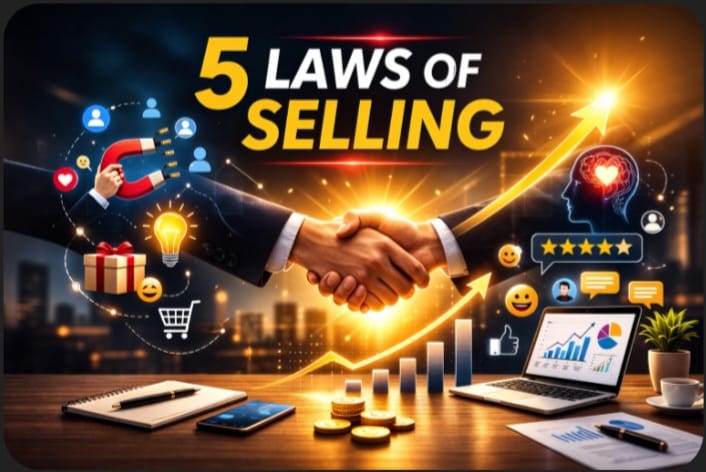
Have you ever wondered why some people close deals effortlessly while others struggle to make even a single sale? The truth is — successful selling isn’t about luck, talent, or being “naturally persuasive.” It’s about understanding the core principles of sales and applying them consistently.
If you study top-performing sales professionals, entrepreneurs, and business owners, you’ll notice a pattern. They follow certain proven selling strategies that build trust, influence buying decisions, and increase conversions. These aren’t random tactics — they’re timeless rules grounded in sales psychology, customer behavior, and value-based selling.
In today’s competitive market, customers are smarter than ever. They don’t want to be pushed. They want clarity, authenticity, and real solutions to their problems. That’s where the 5 laws of selling come in. These powerful principles help you:
- Build stronger customer relationships
- Improve your sales conversion rate
- Overcome objections confidently
- Increase revenue without sounding pushy
Whether you’re a freelancer, business owner, marketer, or just starting your journey in sales, understanding these laws can completely transform how you approach selling. In this guide, we’ll break down the 5 laws of selling that top sales experts swear by — and more importantly, how you can apply them to close more deals and grow your business faster.

Here’s something interesting: many wealthy individuals don’t rely on just one source of income. Instead, they grow their fortune by developing multiple revenue streams – often seven-that support and strengthen each other over time.
What Are the 5 Laws of Selling?
The 5 Laws of Selling are powerful principles that shape how modern sales and persuasion really work. Instead of relying on pushy tactics, these laws focus on customer psychology, emotional connection, trust-building, and long-term relationships — the real drivers behind high conversion rates and consistent revenue growth.
Let’s break them down clearly:
1. Law of Generosity – Selling as an Act of Service
The first rule of successful selling is simple: serve before you sell.
When you treat selling as an act of service, your focus shifts from “How do I close this deal?” to “How can I genuinely help this customer?”
Providing value, educating your audience, and solving real problems build trust naturally. And trust is the foundation of sustainable sales success.
2. Law of FOMO – Use Scarcity as a Smart Tactic
FOMO (Fear of Missing Out) is a powerful psychological trigger in marketing. People act faster when they feel an opportunity might disappear.
Limited-time offers, exclusive bonuses, or limited availability create urgency and improve sales conversions. When used ethically, scarcity marketing encourages decision-making without damaging trust.
Thinking about becoming your own boss? This practical guide on how to start a small business will walk you through each step so you can turn your idea into a real, profitable venture.
3. Law of Emotion – People Buy Feelings, Not Just Products
One of the biggest truths in sales psychology is this:
👉 People don’t buy things. They buy emotions.
Customers buy confidence, security, happiness, status, comfort, or relief from pain. Features explain, but emotions sell. When your message connects emotionally, your sales strategy becomes far more powerful.
4. Law of Belief – Believe in What You’re Selling
If you don’t believe in your product or service, your audience will sense it. Confidence and authenticity are contagious.
When you genuinely believe in the value you offer, your communication becomes natural, persuasive, and trustworthy. Strong belief builds authority — and authority builds sales.
5. Law of Relationship – Build One-to-One Connections
Selling is not a one-time transaction. It’s about building long-term customer relationships.
When customers feel seen, heard, and understood, they stay loyal. Personalized communication, follow-ups, and genuine care turn buyers into repeat customers and brand advocates.
Together, these five laws show that successful selling isn’t about pressure — it’s about service, psychology, belief, emotion, and meaningful relationships. Master these, and your entire sales approach will transform.
Sell Value, Not Just a Product
One of the biggest mistakes in selling is focusing too much on features. Customers don’t wake up thinking, “I need a product with 256GB storage and a 6.7-inch display.” They wake up thinking about their problems and desires. That’s why customers buy solutions, not specifications.
Features describe what a product has.
Benefits explain what a product does for the customer.
For example, instead of saying:
“High-speed processor and long battery life,”
you say:
“Work all day without charging and enjoy smooth performance without frustration.”
See the difference? One lists details. The other highlights outcomes.
A great real-world example is Apple Inc.. They don’t just sell smartphones. They sell simplicity, status, creativity, and a seamless experience. Their marketing focuses on how their products make you feel and how they improve your daily life — not just technical specs.When you shift from product-focused selling to value-based selling, your messaging becomes more persuasive and customer-centric.
Actionable Tips to Apply the 5 Laws of Selling
- Identify the main problem your product solves.
- Translate every feature into a clear benefit. (Ask: “So what?” after each feature.)
- Use emotional triggers like convenience, confidence, security, or growth.
- Share real-life examples or short case studies.
- Speak in the customer’s language, not industry jargon.
Remember, people don’t pay for products — they pay for results, transformation, and experience. When you communicate value clearly, conversions naturally increase.
People Buy From Those They Trust
In today’s competitive market, trust is the real currency of sales. No matter how good your product or service is, people won’t buy if they don’t feel confident in you. That’s why credibility and brand authority play a crucial role in improving your sales conversion rate.
Customers are more informed than ever. Before making a purchase decision, they check reviews, compare options, and look for proof. They want reassurance that they’re making the right choice. This is where social proof and reputation marketing become powerful tools.
The Importance of Credibility
Credibility builds confidence. When your audience sees that you are knowledgeable, experienced, and transparent, they feel safer doing business with you. Strong credibility reduces objections, shortens the sales cycle, and increases customer loyalty.
Social Proof: The Power of Reviews & Testimonials
Social proof is a powerful part of sales psychology because people trust other customers more than ads. Positive reviews build buying confidence, testimonials show real results, and case studies provide clear proof of success.
Even user-generated content adds authenticity to your brand. When potential buyers see that others have benefited from your offer, it reduces risk and increases their willingness to buy.
Personal Branding & Authority Building
In modern selling, especially online, your personal brand matters as much as your product. Sharing valuable content, insights, and expertise positions you as a trusted authority in your niche.
Building authority can include:
- Publishing educational blog posts
- Sharing results and client wins
- Speaking on webinars or podcasts
- Staying consistent on platforms like LinkedIn
The more visible and consistent you are, the stronger your brand trust becomes.
Emotion Drives Buying Decisions
One of the most powerful truths in sales psychology is this: emotions drive buying decisions. While customers may compare features and prices logically, the final purchase decision is often emotional. In simple terms, logic justifies, but emotion decides.
The Psychology Behind Emotional Selling
Human brains are wired to respond to feelings such as fear, excitement, security, belonging, and status. When a product connects to these emotions, it becomes more than just an item — it becomes a meaningful solution. That’s why emotional selling is a core part of modern marketing strategy and consumer behavior analysis.
Customers don’t just buy a fitness program — they buy confidence.
They don’t just buy insurance — they buy peace of mind.
They don’t just buy luxury items — they buy status and identity.
Storytelling as a Powerful Sales Tool
Storytelling is one of the most effective ways to trigger emotional engagement. Instead of listing product features, share relatable stories, customer journeys, or transformation results. Stories activate imagination and help customers see themselves experiencing the outcome.
When your audience emotionally connects with your message, your brand recall and conversion rate increase naturally.
How to Trigger Emotional Connection in Marketing
To apply emotional selling effectively:
- Focus on transformation, not just features
- Highlight pain points and desired outcomes
- Use powerful words that evoke feeling
- Share real customer success stories
- Align your brand message with your audience’s identity
When your marketing connects emotionally, customers don’t just understand your offer — they feel it. And when they feel it, they are far more likely to buy.
Clarity Converts, Confusion Kills Sales
In sales and marketing, clarity is power. If your message is confusing, complicated, or overloaded with information, potential customers will leave. Clear messaging directly improves your conversion rate because people take action when they fully understand what you offer and how it benefits them.
When your value proposition is simple and specific, customers don’t have to “figure it out.” They immediately see what problem you solve and why it matters. That’s why clear communication is a key part of conversion optimization and effective sales strategy.
Clear Messaging = Higher Conversions
The easier your message is to understand, the faster people make decisions. That’s one of the core ideas behind the 5 laws of selling — clarity builds confidence, and confidence drives action. Avoid jargon, long explanations, and vague promises that confuse potential customers.
Instead of saying, “We provide innovative business growth solutions,” say, “We help small businesses increase sales by 30% in 90 days.” Specific sells because it clearly communicates value and results.
Avoid Complicated Offers
Too many options, packages, or bonuses can overwhelm buyers. When customers feel confused, they delay their decision — or worse, they leave. Keep your offer focused and highlight the main benefit clearly.
Use Simple CTAs
Your call-to-action (CTA) should be direct and action-driven.
Examples:
- “Get Started Today”
- “Book Your Free Consultation”
- “Download the Guide”
Clear CTAs reduce friction and guide users toward the next step in the sales funnel.
Follow-Up Multiplies Revenue
One of the biggest truths in sales is this: most deals are not closed on the first attempt. In fact, a large percentage of sales happen only after multiple follow-ups. Yet many businesses stop after one message or one call — and leave revenue on the table.
Most Sales Happen After Multiple Follow-Ups
Customers rarely buy immediately. They need time to think, compare options, check their budget, or build trust. Consistent follow-up keeps your brand top-of-mind and increases your sales conversion rate over time.
Why People Hesitate Before Buying
There are many reasons buyers delay decisions:
- Fear of making the wrong choice
- Budget concerns
- Lack of urgency
- Need for more information
- Waiting for approval or better timing
Understanding these objections is part of effective sales psychology and customer journey management. A well-timed follow-up can address doubts and provide reassurance.
Email Marketing & Retargeting
Smart businesses use email marketing automation and retargeting ads to nurture leads.
Email follow-ups can:
- Provide additional value
- Share testimonials or case studies
- Offer limited-time bonuses
- Answer common objections
Retargeting campaigns remind visitors about your product after they leave your website, increasing brand recall and purchase intent.
Simple Follow-Up Framework
Here’s a basic and effective follow-up structure presented in a clear table format:
| Timeline | Follow-Up Action | Purpose |
|---|---|---|
| Day 1 | Thank them and summarize the offer | Reinforce value and show professionalism |
| Day 3–4 | Share helpful content or answer common questions | Build trust and handle early objections |
| Day 6–7 | Provide social proof or a case study | Increase credibility and reduce perceived risk |
| Final Reminder | Add urgency with a deadline or bonus | Encourage action using scarcity |
The key is consistency without being pushy. When done correctly, follow-up builds trust, strengthens customer relationships, and multiplies revenue over time.
Remember, persistence — combined with value — turns interested prospects into paying customers.s.
Common Mistakes to Avoid in Selling
Even with the right sales strategy and marketing techniques, certain mistakes can quickly reduce your conversion rate. Successful selling isn’t just about what you do right — it’s also about what you avoid.
Being Too Pushy
Aggressive selling damages trust. When customers feel pressured, they naturally resist. Modern consumers prefer a consultative selling approach, where the focus is on understanding their needs rather than forcing a decision. Confidence attracts — pressure repels.
Talking More Than Listening
One of the biggest mistakes in sales communication is dominating the conversation. Great sales professionals practice active listening. When you listen carefully, you uncover pain points, objections, and motivations. Selling becomes easier because you’re offering solutions that truly fit the customer’s needs.
Focusing Only on Price
Competing only on price weakens your brand positioning. If you constantly lower prices to win deals, customers start seeing your offer as a commodity. Instead, focus on value-based selling, highlighting benefits, results, and long-term impact rather than just cost.
Ignoring Customer Objections
Objections are not rejections — they are requests for clarity. Ignoring concerns about price, results, or trust can break the sales process. Addressing objections with patience and clear information strengthens credibility and improves the overall customer experience.
Avoiding these common sales mistakes helps you build stronger relationships, increase trust, and close more deals consistently.
Conclusion
The 5 Laws of Selling are simple, but incredibly powerful when applied correctly. When you sell with generosity, use FOMO strategically, connect through emotion, believe deeply in what you offer, and build strong one-to-one relationships, selling becomes natural and effective — not forced or uncomfortable.
These principles show that successful selling isn’t about manipulation. It’s about service, psychology, clarity, and trust. When you focus on value, build credibility, communicate clearly, and follow up consistently, your sales conversions and customer loyalty naturally improve.
The best part? Selling is not an inborn talent — it’s a skill. And like any skill, it can be learned, practiced, and mastered over time.
Now it’s your turn.
Start applying these 5 laws in your business today and observe the difference in your results. If you found this guide helpful, save the page link or share it with someone who needs it.
What are the 5 laws of selling?
The 5 Laws of Selling are proven principles that guide successful sales strategies. They include the Law of Generosity (serve before you sell), Law of FOMO (use scarcity wisely), Law of Emotion (people buy feelings, not just products), Law of Belief (confidence in your offer builds trust), and the Law of Relationship (build strong one-to-one connections). Together, these laws improve sales performance and customer trust.
Why are sales laws important?
Sales laws are important because they are based on sales psychology and customer behavior. They help businesses understand how buyers think, feel, and make decisions. When applied correctly, these principles increase conversion rates, strengthen brand credibility, and create long-term customer relationships.
Can beginners apply these 5 Laws of Selling?
Yes, absolutely. Selling is a skill that anyone can learn. Even beginners can apply these laws by focusing on providing value, building trust, communicating clearly, and understanding customer needs. With practice and consistency, these principles can significantly improve sales results over time.